A walk around Chesterton
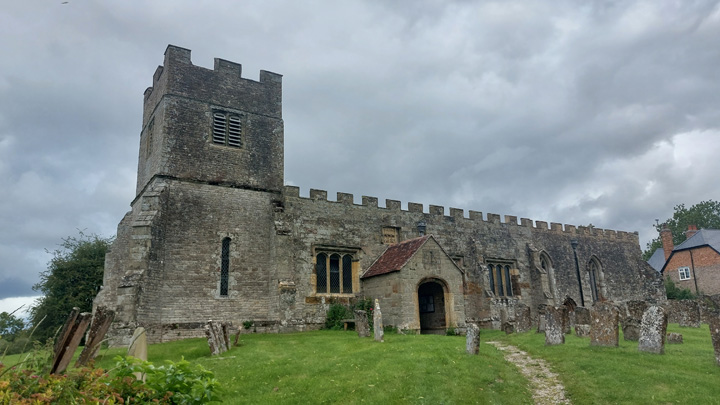
This is a post I’ve been meaning to write for roughly three years. I picked up a small historical leaflet from St Giles Church in Chesterton on one of my first visits there and it’s sat on my desk ever since as a reminder to pull these thoughts together.
The Route & Practical Details
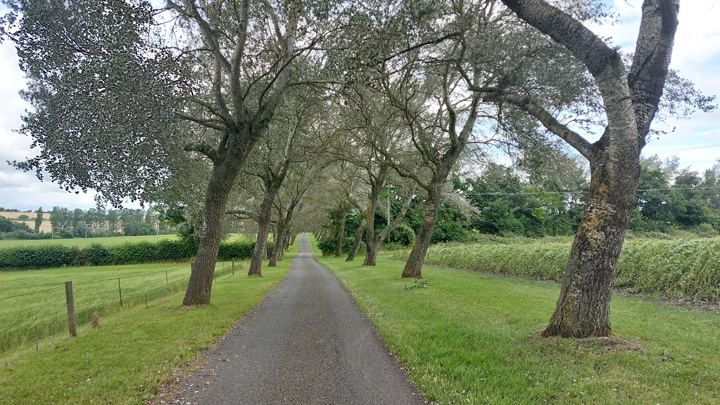
- Distance: ~8 km (5 miles) loop, easily adjusted to be longer or shorter using the network of surrounding footpaths.
- Terrain: Open farmland, grassy tracks, and quiet country lanes. Occasionally crosses roads but mostly offroad.
- Navigation: Best followed using OS maps or a GPS route. This is the route I usually do – OS Maps Walking Route GPS
- Parking: There is roughly five spaces by the church, best to arrive early though as they tend to fill up by dog walkers.
St Giles Church
One of the main reasons I love walking here is St Giles Church, a quiet sanctuary dating back to the 11th century that is steeped in local history.
St Giles is the patron saint of beggars, the disabled, and lepers. Born into a wealthy Greek family, he renounced his inheritance and retreated to Gaul (modern-day France) to live as a hermit in a secluded cave. He lived on herbs, berries, roots, and on the milk of a spotted hind (female red deer), who came to him daily and allowed him to milk her. He lived this life of solitude until the local king was out hunting and chased the hind back to the cave, where it threw itself into St Giles open arms. One of the frustrated hunters shot an arrow into the thicket and it hit St Giles in his protecting arm. This story is beautifully depicted in one of the stained glass windows inside the church.
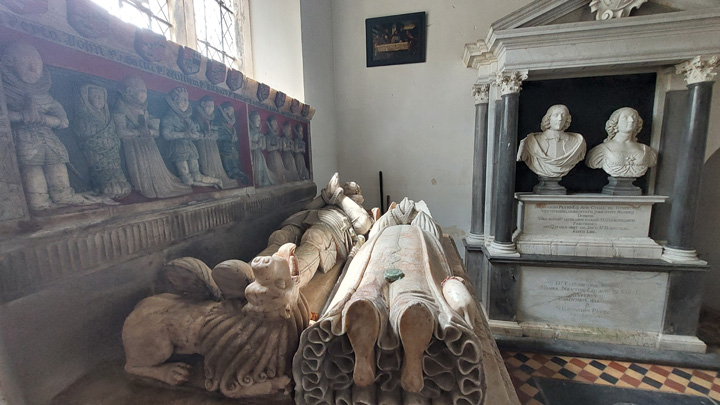
Inside the church, you’ll also find the impressive tomb chest of Humphrey Peyto and his wife Anne, alongside several busts of their descendants. The Peyto family were prominent local landowners, serving as lawyers, soldiers, and Members of Parliament. During the English Civil War, Sir Edward Peyto stood on the side of Cromwell’s Parliamentarians, famously leading the successful defence of nearby Warwick Castle against Royalist forces.
Around the back of the churchyard stands the Peyto Gateway, a freestanding red brick archway believed to have been built to give the family direct access to the church from their grand home, Chesterton House. The house itself was demolished in 1802 following the death of Margaret Peyto, the last of the direct family line, leaving the solitary gateway standing quietly in the landscape.
Chesterton Windmill
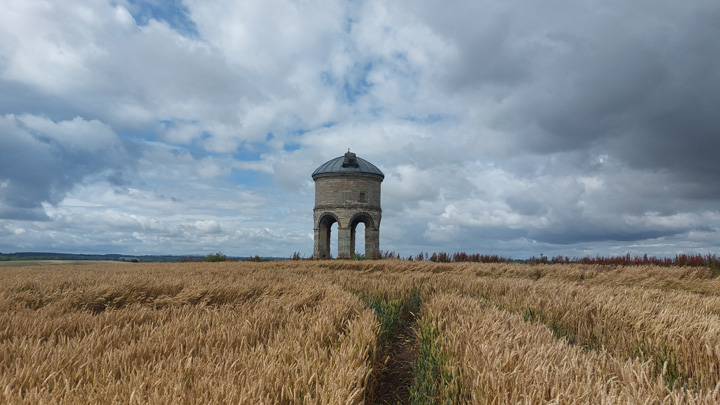
Nearby, but not within walking distance due to no footpath connecting them is Chesterton Windmill. It’s a 17th-century cylindric stone tower windmill with an arched base, and is a Grade I listed building. It’s perfect for practising photography and for those rare astronomical events that call for going somewhere higher up and dark. I went there for the C/2024 G3 (ATLAS) comet expecting to be all alone and instead found roughly 30 people set up with telescopes and cameras. One guy had a super strong laser pointed and helpfully pointed it out for people not sure where to look. Though he was a lot less popular with the long exposure photographers!